PulseWatch — E-commerce Monitoring Platform
Multi-tenant SaaS, 500+ customers, sole engineer
Key metrics
Context
E-commerce stores run with no observability layer between store events and the business owner — the person who notices something broke is the customer, not the team.
The challenge
Stores silently lose revenue: stockouts, payment errors and API outages go undetected for hours. The problem is not the store breaking — it is nobody finding out while revenue drains.
The architecture
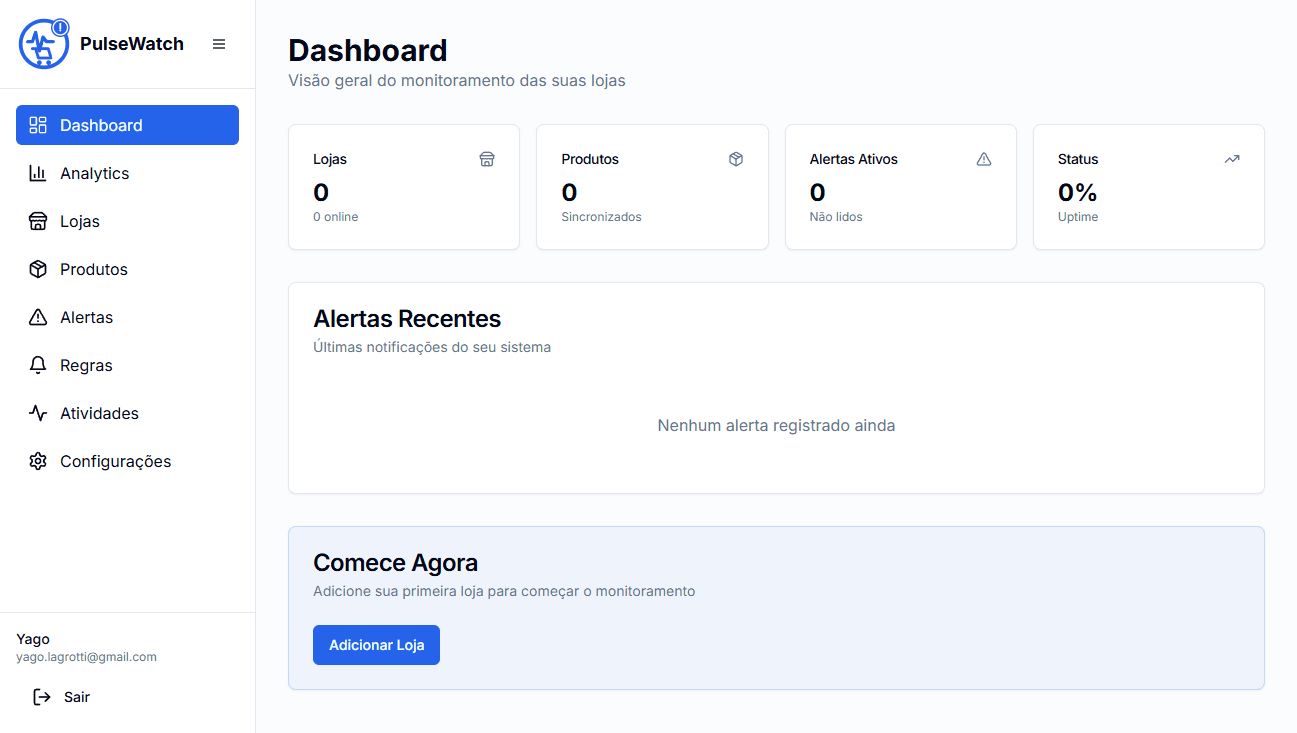
I built the whole platform from scratch as sole engineer: configurable health-check workers, a threshold-based alerting engine and a multi-channel notification pipeline (email, SMS, Slack), with a Node.js/TypeScript API over PostgreSQL and a real-time dashboard.
Architecture flow
Monitored store
- Stock
- Payments
- API
Health-check workers
- Configurable
Alerting engine
- Per-customer thresholds
Notification
- SMS
- Slack
Engineering decisions
The alert is the product
The value is not in collecting metrics, it is in interrupting the right person at the right moment. That is why the notification pipeline is multi-channel and thresholds are per-customer — an alert that arrives late, or on the wrong channel, is worth nothing.
Multi-tenant from day one
Tenant isolation was decided before the first customer signed up rather than retrofitted later — which is what allowed growth to 500+ accounts without a rewrite along the way.
A whole product, one engineer
From the data model to the dashboard, taking in billing and alert delivery. That scope forces you to pick where to spend engineering and where to accept the simple option — and making that call is the job.